
Fire safety depends on systems that work together. Alarms provide a warning. Sprinklers help control flames. Marked exits guide occupants out of the building. Rated walls and doors help contain fire and smoke so people have more time to reach safety.
Business owners may use the term fireproof doors, but no building component makes a property completely immune to fire. A fire-rated door assembly is designed and tested to resist fire for a stated period under specific conditions. Its value lies in slowing the spread of danger through protected openings.
How Fire-Rated Door Assemblies Work
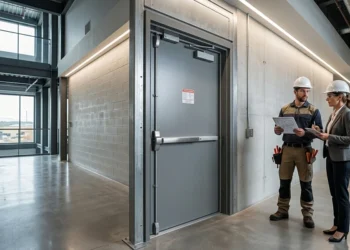
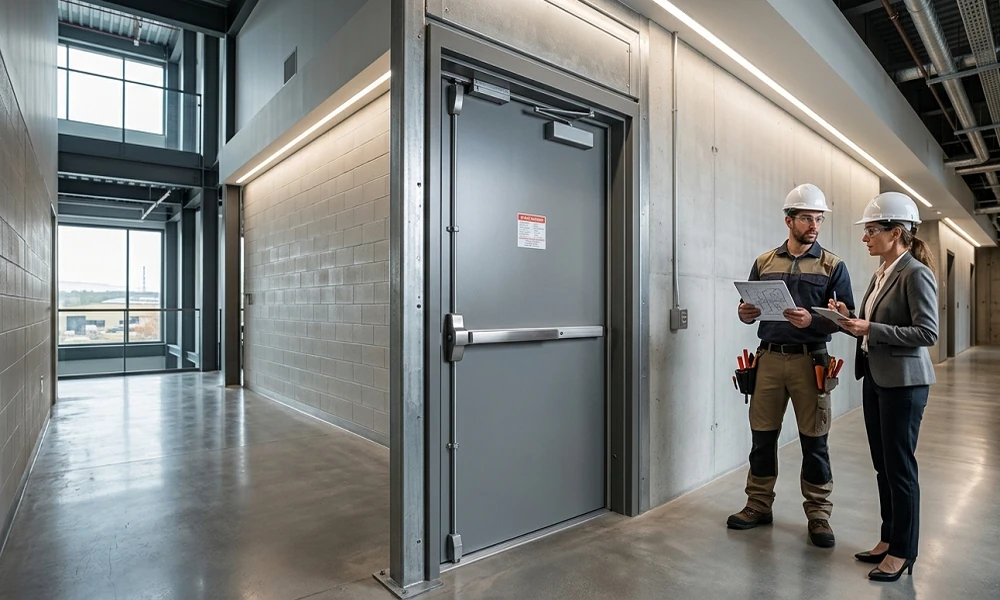
A complete assembly includes more than the door leaf. The frame, hinges, closer, latch, glazing, seals, fasteners, and other hardware must work as a coordinated system. Changing one part without checking compatibility may affect how the opening performs.
Ratings are commonly expressed in minutes. The appropriate rating depends on the surrounding wall, the opening’s location, the building’s use, and applicable codes. A qualified professional should confirm these requirements rather than selecting a product based on appearance or price alone.
The door also needs to close and latch reliably. If it remains wedged open, catches on the floor, or fails to engage with the strike, it may not protect the opening as intended.
Where Businesses May Need Added Protection
Commercial properties contain many areas where controlling fire movement is important. Examples can include stairwells, corridors, mechanical rooms, storage areas, boiler rooms, kitchens, and openings between separate sections of a building.
Warehouses may need protection around high-risk equipment or divided storage zones. Offices may require rated openings along exit routes. Retail properties, healthcare environments, hotels, schools, and multifamily buildings can have different occupancy and egress requirements.
For this reason, choosing fire-rated doors for business premises should begin with an assessment of the building. The opening’s size, traffic level, wall construction, hardware needs, and accessibility requirements all influence the final specification.
Choosing the Right Door and Hardware
Steel is a common choice because it offers strength and suits demanding commercial environments. Wood doors can also carry fire ratings when they are manufactured and labeled for the intended application. Some openings may include listed fire-protection-rated glazing where visibility is needed.
Fire-resistant doors should have labels that remain visible and legible. These labels help identify the tested rating and confirm that key components belong in a rated assembly. Field modifications, unapproved hardware, excessive gaps, or damaged labels can create compliance and performance concerns.
Door hardware also requires careful selection. Closers, hinges, locks, panic devices, coordinators, and protection plates must suit the opening. The door should support security and daily traffic without interfering with safe egress.
What Proper Installation Involves
Installing a fire-rated door is precise work. The installer must confirm that the frame is secure, the leaf is aligned, clearances are suitable, and every required component is correctly fitted. The finished door should swing freely, close completely, and latch without manual help.
The opening must also preserve a safe exit path. OSHA’s requirements for exit routes state that exit routes must remain unobstructed and that exit doors must be capable of opening from the inside without keys, tools, or special knowledge, subject to limited exceptions.
Local requirements can vary by jurisdiction and building type. Plans, product listings, and existing conditions should therefore be reviewed before work begins. An experienced commercial door provider can help identify visible problems, coordinate suitable components, and complete the work according to the approved specification.
Inspection and Maintenance Matter
A rated opening can lose effectiveness through ordinary wear. Loose hinges may cause sagging. A damaged closer may stop the door from shutting. Paint, flooring changes, or building movement can reduce clearance or prevent latching. Missing screws and unauthorized hardware changes may also affect the assembly.
The International Fire Code calls for opening protectives in rated assemblies to be inspected and maintained in accordance with NFPA 80, as reflected in its fire and smoke protection provisions.
Staff should never prop a rated door open with a wedge or another object. Managers can also encourage prompt reporting when a door drags, slams, sticks, or fails to latch. Formal inspections should be completed at the intervals required by the governing code and authority having jurisdiction.
Building a Safer Commercial Property
Fire-rated protection is strongest when selection, installation, inspection, and maintenance receive equal attention. A suitable door cannot compensate for incompatible hardware, and a good installation will not remain dependable without care.
Commercial Door Works can help businesses evaluate rated openings, address damaged components, and plan professional door service. Visit the company’s website to explore solutions for safer, more dependable commercial access points.
Frequently Asked Questions
Is a fire-rated door completely fireproof?
No. It is tested to resist fire for a specified period under defined conditions. Its purpose is to help limit fire and smoke movement as part of a complete protection system.
Can ordinary hardware be used on a rated opening?
Not automatically. Hardware should be listed or approved for the assembly and suitable for its required operation.
Should a rated door close by itself?
In many applications, yes. It generally must close and latch as designed, though exact requirements depend on the opening and applicable code.