
Graphic Recording for Events: Strengthening Business Communication Through Visuals

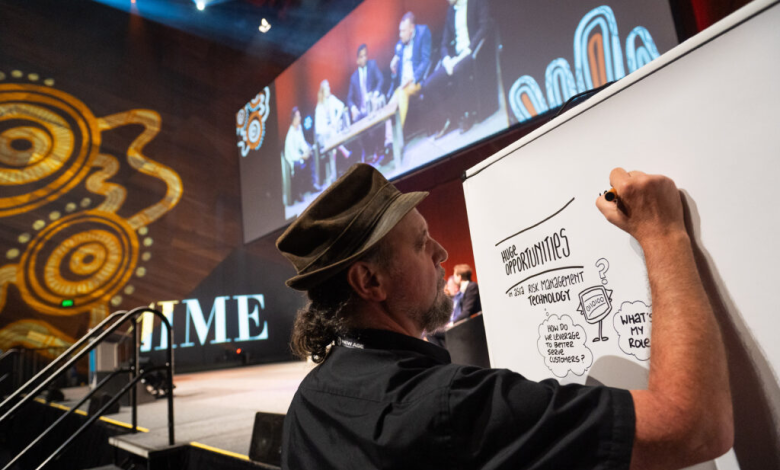
Graphic recording has emerged as a highly effective communication approach for today’s organizations. When teams come together for strategy meetings, workshops, conferences, or leadership gatherings, the goal is often clarity and shared understanding. Capturing conversations visually in real time helps participants grasp ideas faster and remain engaged throughout the session.
Also known as live scribing or visual documentation, graphic recording turns spoken dialogue into illustrated summaries. These visuals help teams connect ideas, retain key messages, and align around common objectives. By making discussions visible, organizations create a shared reference that supports clearer communication and stronger collaboration.
Businesses increasingly choose graphic recording because it enhances communication beyond what traditional note-taking can achieve. Visual summaries simplify complex topics, highlight relationships between ideas, and provide an immediate overview of discussions. Just as importantly, they help participants feel acknowledged and included in the process.
Why Graphic Recording Supports Business Communication
Visual communication helps people process information more quickly. Many business conversations involve abstract concepts, strategic thinking, or technical details. Illustrations translate these ideas into accessible visuals that are easier to understand and discuss.
Graphic recording also increases engagement during events. Watching ideas take shape visually keeps attention focused and energy high. Participants are more likely to stay present when they can see their contributions reflected in real time.
Another key benefit is reduced misunderstanding. Visual notes show how ideas connect, making the flow of conversation easier to follow. This shared clarity supports better alignment and more confident decision-making.
Visuals also improve memory and retention. People tend to remember images far more effectively than text alone. Teams leave with a clear visual summary they can revisit long after the event.
Finally, graphic recordings become valuable communication assets. The finished visuals can be reused in presentations, internal communications, reports, training materials, or digital content. A single illustration can support ongoing communication well beyond the original session.
Live Graphic Recording at Events
In-person graphic recording is a highly interactive experience. Participants can watch the visual unfold as discussions progress and often contribute ideas or clarifications along the way. Seeing concepts illustrated on a large surface creates immediate clarity and a shared focal point.
This approach works especially well for collaborative settings such as workshops, leadership retreats, design sessions, strategic planning meetings, and conferences. The visual presence in the room helps maintain momentum and encourages collective ownership of ideas.
Live visual documentation also strengthens collaboration. It creates a sense of movement and progress, helping groups feel that their conversations are leading somewhere concrete and meaningful.
Remote Graphic Recording for Online and Hybrid Teams
Remote graphic recording has become increasingly common as organizations adopt online and hybrid ways of working. Visual practitioners can join virtual sessions and capture conversations live, producing clear digital illustrations as discussions unfold.
Digital visual documentation offers several advantages. Files can be delivered immediately, shared easily across teams, and used for follow-up communication. This makes it especially useful for distributed teams that need consistent, accessible records of their work.
Remote visualization works well for online workshops, collaborative sessions, virtual roundtables, and digital events. It ensures that even when teams are not physically together, ideas remain visible and aligned.
Graphic Recorders as Communication Partners
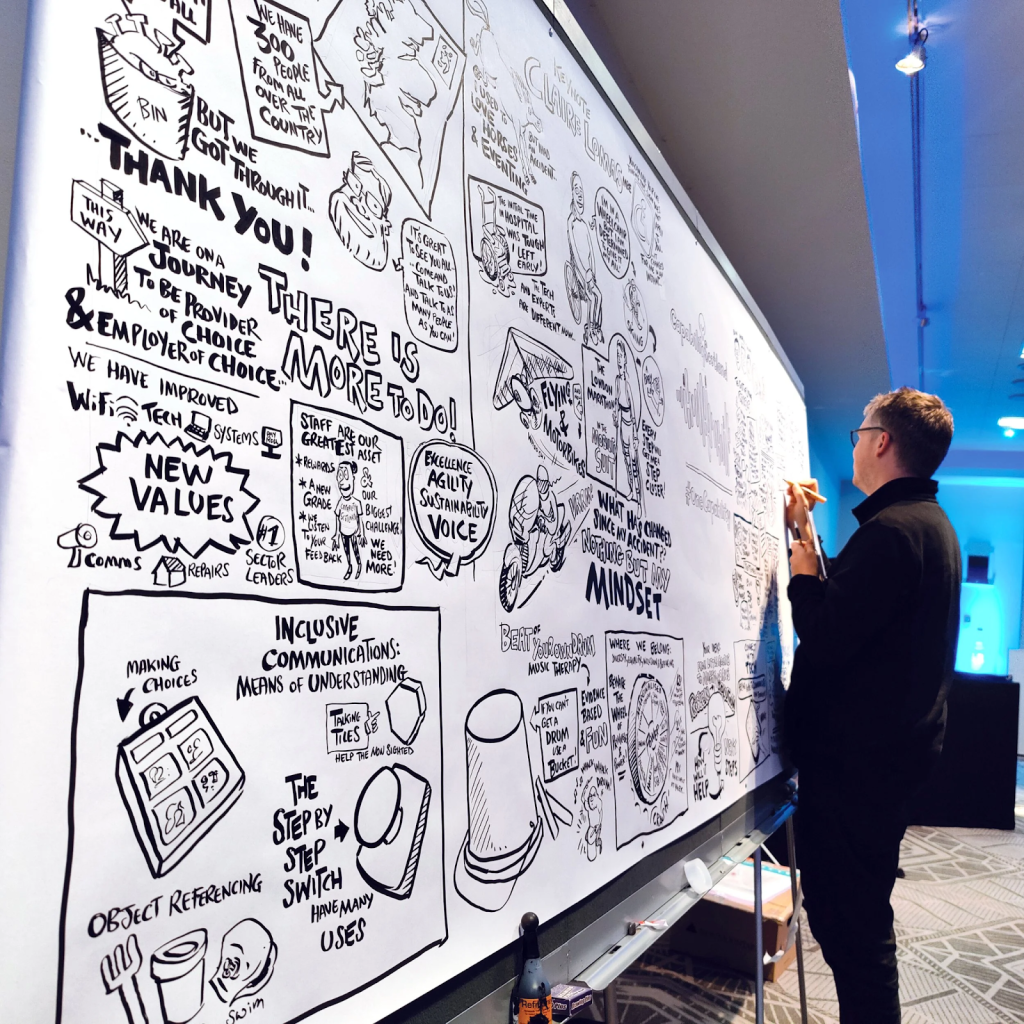
Today’s graphic recorders do more than draw. They actively listen, synthesize information, and clarify complex discussions. Their role is to help translate conversation into visuals that make sense to everyone involved.
Graphic recording supports alignment during strategic discussions, improves communication across departments, accelerates onboarding, and encourages innovation. It also strengthens leadership communication by providing a clear visual narrative.
Many organizations involve visual practitioners early in the process to support message development, visual frameworks, and communication planning. This collaborative approach ensures that visuals accurately reflect intent and goals.
What a Graphic Recorder Provides
A graphic recorder captures the essence of a conversation and transforms it into an illustrated summary that can be used immediately. These visuals support internal communication, presentations, training materials, and external messaging.
Teams use visual records to share insights across the organization, support decision-making, deepen understanding, and preserve complex discussions in a clear, engaging format. Visual communication helps ideas land more effectively and makes messages easier to remember.
Understanding the Cost of Graphic Recording
The cost of graphic recording varies depending on factors such as event duration, preparation time, complexity, and whether the work is delivered in person or remotely. Rates typically reflect the experience level of the visual practitioner and the scope of the project.
Organizations can choose from different levels of support to match their budget, language needs, and communication goals. Clear proposals usually outline preparation, delivery, and final outputs, ensuring transparency throughout the process.
Conclusion
Graphic recording transforms the way organizations communicate by making conversations visible, engaging, and easier to understand. Whether used in live events or virtual settings, visual documentation supports clarity, alignment, and meaningful participation across teams.
By turning complex discussions into accessible visual summaries, graphic recording creates lasting value beyond the event itself. These visuals continue to support communication, decision-making, and shared understanding, making them a powerful tool for modern business collaboration.