

American factories are struggling on all fronts right now. Consumers want cheap prices and fast service. Government regulations are constantly evolving. One cargo ship gets stuck sideways, and suddenly critical supplies vanish for months. Meanwhile, overseas competitors keep undercutting prices. Companies that stand pat watch their market share evaporate. Those who rush forward without thinking waste millions on dead ends.
Technology Takes Center Stage
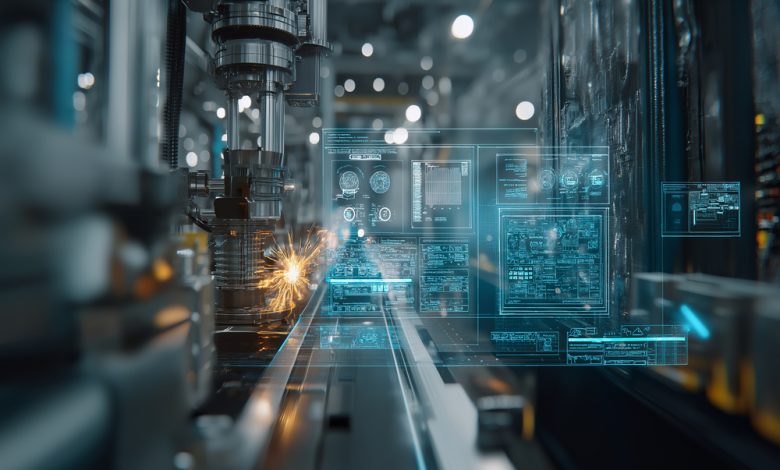
Walk through a factory today and you’ll see screens everywhere. Not for watching videos, but for watching everything else. Machines report their status constantly. A bearing heats up five degrees above normal? An alert fires off before anything breaks. This beats the old days of finding problems after ruining entire production runs.
Robots do the heavy lifting and repetitive stuff now. People haven’t disappeared though. Their work just got more interesting. One person might supervise six machines while solving problems no computer understands yet. That same worker who used to tighten bolts all day now programs robots, reads diagnostic reports, and decides when human intuition trumps what the data suggests. Companies scramble to train their workforce because these skills didn’t exist twenty years ago.
Everything talks to everything else through software. Customer orders trigger production schedules automatically. Raw material bins send purchase orders when supplies dip. Quality checks happen constantly, not just before shipping. All this connection means fewer delays, fewer mistakes, and fewer angry phone calls from customers.
Materials Make the Difference
You can’t build great products with lousy ingredients. That’s why manufacturers obsess over their material suppliers. The right chemical mixture makes plastic strong enough to replace metal. The wrong one creates junk that breaks on first use. Companies such as Trecora provide specialty chemicals that become the foundation for thousands of different products such as automotive coatings that survive salt and sun, plastic parts that bend without breaking, lubricants that keep machines humming for years. Few consider these chemical components, but they are essential for contemporary production.
New materials keep pushing boundaries. Originally employed in aerospace, carbon fiber is now utilized in bicycles and tennis rackets. Shape-memory plastics return to form after being squashed. Heat-absorbing materials regulate building temperatures day and night without using thermostats. Early identification of such opportunities gives manufacturers a major edge.
Don’t overlook what happens at the surface level. Products can last triple the time with a coating that’s thinner than paper. Microscopic surface modifications result in fog-resistant glass, scratch-resistant metal, and stain-resistant fabric. Little tweaks can bring about considerable progress.
Sustainability Drives Innovation
Going green stopped being optional. Manufacturers track every pound of carbon they produce. They hunt for recycled materials that perform like virgin stock. Solar panels sprout on factory roofs. LED lights replace the old fluorescents inside.
But here is the kicker. Environmental responsibility often pays for itself. Lower energy use means smaller electric bills. Less waste means reduced hauling fees. Products built to last generate fewer warranty headaches and happier repeat customers.
In many areas, water is now a valuable resource. Smart manufacturers continuously recycle the same water. They clean and reuse it instead of discarding it. They pick processes that barely need water at all. Some plants now run mostly on yesterday’s wastewater, cleaned up and put back to work.
Conclusion
Yes, manufacturing gets harder every year. But solutions pop up for those paying attention. Smart technology prevents disasters before they strike. Revolutionary materials make the impossible possible. Going green saves money while saving face. The successful companies will be the ones that manage to handle all these factors simultaneously. They will see issues as opportunities for growth, not as reasons to justify failures.