

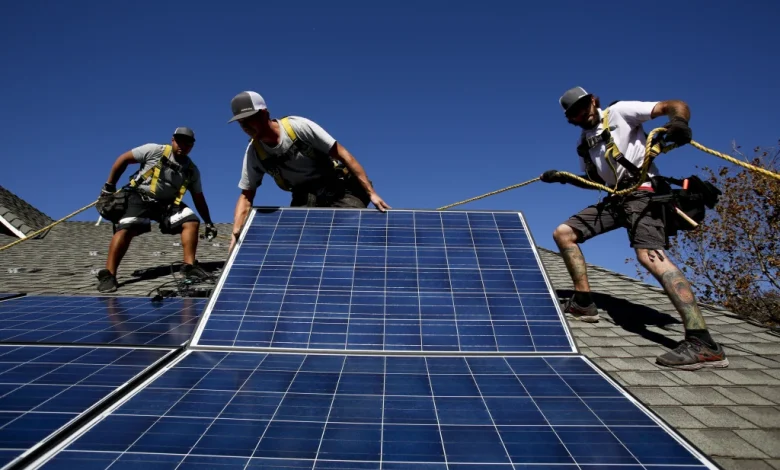
Support for solar energy spans regions, income levels, and political affiliations. Homeowners across the country are turning to solar power not because of ideology but because it provides reliable power, lower energy costs, and greater independence. Freedom Forever Solar, one of the nation’s largest residential solar providers, works with homeowners in diverse communities, from rural towns to urban centers, reflecting a nationwide shift toward shared energy priorities.
Solar adoption has moved beyond traditional geographic and political boundaries. As energy costs rise and grid reliability becomes a concern, more families are embracing solar as a practical solution that aligns with everyday needs. This momentum is reshaping how communities view their relationship with energy, emphasizing practical results over partisan debates.
Shared Goals Across Communities
Whether in a red county or a blue suburb, homeowners share common goals regarding energy. Lower utility bills, stable power during outages, and long-term financial predictability are priorities that resonate across political lines. These shared concerns explain why support for solar remains strong in states with very different political landscapes.
Polling data consistently shows broad support for renewable energy, with solar leading as one of the most popular options. Homeowners view solar through a practical lens, focusing on household benefits rather than partisan narratives. This shared perspective is reflected in how communities discuss energy at the local level, centered on cost savings, resilience, and control.
Economic Factors Drive Decisions
Rising energy costs have made solar an attractive option for middle-class families seeking greater control over their budgets. Time-of-use pricing, seasonal fluctuations, and infrastructure costs have led to unpredictable utility bills in many states. By generating their own power, homeowners can stabilize expenses and protect themselves from sudden price changes.
These economic motivations cut across demographics. Families in both conservative rural areas and liberal urban neighborhoods are seeking ways to reduce monthly costs. Solar offers a straightforward path to achieve that goal, making it a unifying issue rather than a divisive one. In many communities, neighborhood discussions about solar centers focus less on politics and more on shared financial strategies.
Reliability and Independence
Grid reliability is another factor that resonates widely. Severe weather events, aging infrastructure, and capacity constraints have led to a rise in power outages. Communities experiencing these disruptions are increasingly looking for ways to maintain access to electricity during emergencies.
Solar systems paired with storage allow homeowners to power essential appliances when the grid falters. The desire for energy security reflects a shared value of self-reliance that appeals across political and cultural lines. Whether in hurricane-prone coastal regions or inland towns facing extreme heat, reliable power has become a priority that transcends ideology.
Policy and Local Implementation
Policy plays a critical role in supporting these homeowner priorities. Federal incentives lay the groundwork for affordability, while state and local programs shape how quickly and easily families can adopt solar energy. When policies align with shared homeowner goals, adoption accelerates.
Some local jurisdictions have modernized permitting systems, streamlined interconnection processes, and created incentives that reflect practical household needs. These measures make solar energy more accessible without relying on political messaging, instead focusing on clear economic and reliability benefits. When local and federal policies are coordinated, the path to solar becomes smoother for homeowners in any region.
The Proof of Impact
Customer feedback shows how solar adoption transcends political divides. Freedom Forever reviews often emphasize predictable timelines, clear communication, and financial benefits as reasons for choosing solar. These priorities are not tied to geography or political affiliation. Homeowners in different regions share similar motivations, underscoring the universal appeal of reliable and affordable energy solutions.
This consistency underscores how industry practices that prioritize transparency and efficiency foster trust across communities, regardless of the political context. It also demonstrates that when companies deliver dependable service, they help strengthen public support for solar in a way that cuts across partisan lines.
Economic and Workforce Impact
Residential solar creates local jobs in installation, maintenance, and project management. These positions support electricians, roofers, and skilled tradespeople in communities nationwide. Policy stability encourages steady job growth and strengthens local economies, which are valued in both conservative and liberal regions.
For many communities, these jobs represent stable, long-term opportunities that are not dependent on political shifts. Workforce development programs tied to solar installation can train individuals for skilled trades, support families, and boost local tax bases. The economic case for solar energy is compelling, not only for homeowners but also for municipalities seeking to strengthen their local economies. Solar policy can appeal to a broad coalition of stakeholders by focusing on economic benefits and workforce development. This bipartisan appeal strengthens political support for continued investment in residential solar. It provides a durable base for future policy agreements.
Aligning Policy with Public Support
While public opinion strongly favors solar energy, federal and state energy policies often lag behind homeowner demand. Aligning policy with these shared priorities can accelerate adoption and strengthen national energy security. Expanding incentives, standardizing permitting, and supporting storage integration are steps that reflect what homeowners across the political spectrum already value.
Policymakers have an opportunity to respond to clear public sentiments. By focusing on economic savings, reliability, and independence, they can craft legislation that resonates across party lines and reflects the lived experiences of families nationwide.
A National Opportunity
Bipartisan support for solar energy represents a rare opportunity to advance energy policy on common ground. Homeowners are united by practical concerns rather than divided by ideology. As more families adopt solar, this shared momentum can inform policy decisions that reflect real-world priorities. Local and federal leaders who recognize these shared motivations can design programs that support homeowners in all regions. By building on common goals, the United States can strengthen its clean energy future without deepening political divides. It is a policy area where progress does not require consensus on every issue, only a focus on what matters to households across the map.
Solar energy has become a unifying issue across political and geographic lines. Homeowners in every region share similar motivations. Lower costs, reliable power, and greater independence. These priorities are driving bipartisan momentum that policymakers can build upon to shape effective energy legislation. Freedom Forever serves homeowners in communities across the country, reflecting the broad and growing demand for clean energy. By aligning policies with shared household goals, leaders can support a clean energy transition that brings tangible benefits to families everywhere, while strengthening the nation’s economic and energy security.