
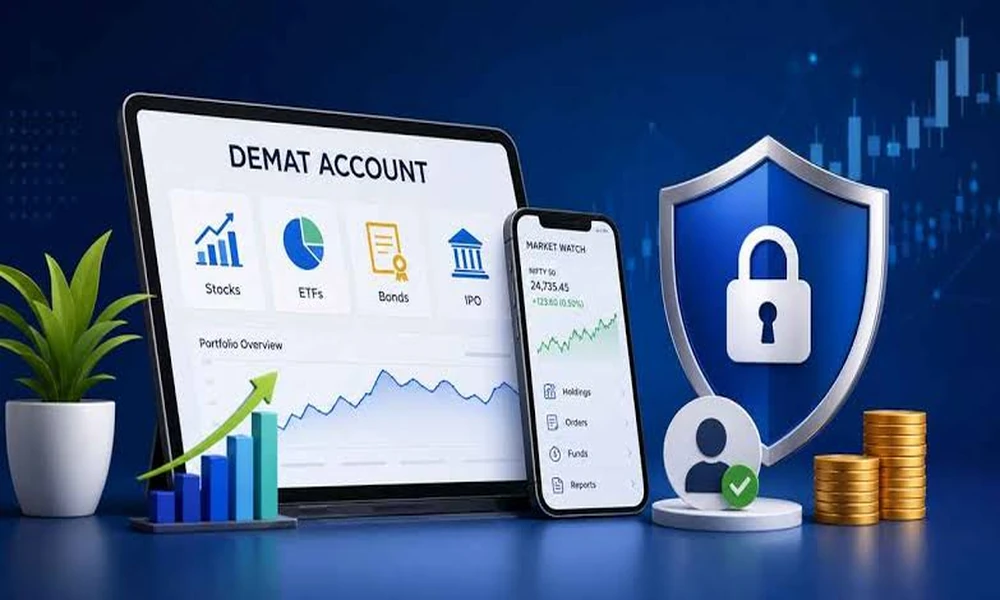

A Top Demat Account should do more than simply hold securities in electronic form. For investors, the quality of a demat account also depends on factors such as account access, charges, security controls, transaction records, customer support and integration with investment services.
Since most securities are now held electronically, demat accounts play an important role in managing shares and other eligible instruments. However, investors should avoid selecting an account only because it appears popular or offers an attractive introductory benefit.
A more practical approach is to compare the features that affect day-to-day account management and long-term usability.
What A Demat Account Does For An Investor
A demat account provides an electronic way to hold eligible securities, replacing the need to maintain physical share certificates. When a share purchase is completed and settled, the securities are credited to the investor’s demat account. When securities are sold, the relevant quantity is debited through the applicable settlement process.
Depending on the account structure and services offered, eligible holdings may include:
- Equity shares
- Exchange-traded funds (ETFs)
- Bonds
- Government securities
- Units of eligible investment products
The specific instruments supported can vary by provider and account arrangement, so investors should confirm which securities can be held before opening an account.
How The Depository System Works
In India, demat accounts are part of a regulated depository framework. Investors typically access depository services through a Depository Participant (DP), which acts as the service provider connecting the investor to the depository.
The account also provides records of securities balances and transactions. Reviewing account statements and transaction details can help investors check that their holdings are accurately reflected and identify any activity they do not recognise.
The Real Cost Is More Than The Opening Fee
An account-opening offer can be useful when comparing providers, but it does not show the full cost of maintaining and using a demat account. Depending on the provider, account type, and services used, additional charges may apply.
These may include annual maintenance charges, debit transaction fees, pledge-related charges, statement or service fees, and other applicable account expenses. As a result, an account with no opening fee may still have recurring or transaction-based costs.
Compare Charges Against Your Investing Habits
The cost of a demat account depends partly on how it is used. An investor who mainly holds securities for the long term may have a different pattern of charges from someone who regularly sells holdings or uses additional account services.
A practical comparison should therefore consider expected activity, not just the advertised fee. Review the provider’s current charge schedule and estimate which fees are likely to apply to your own usage.
This approach gives a clearer picture of the potential cost over time and helps distinguish a low initial fee from an account that may be economical for your expected investing activity.
Review The Digital Account Experience
Most investors now access their holdings through websites or mobile platforms. The interface should make important information easy to locate without requiring unnecessary navigation.
Useful sections may include:
- Current holdings
- Transaction history
- Account statements
- Corporate action details
- Reports
- Profile and nominee information
- Security settings
The account experience should remain understandable even for users who are relatively new to financial markets.
Around this stage, investors comparing providers may also review how a Share Market App integrates holdings, market information and transaction access within its broader digital interface.
Portfolio Visibility Should Support Better Oversight
A demat account’s holdings section should make it easy to understand what securities are held and how those holdings are changing. Depending on the platform, information may include security names, quantities, market values, acquisition details, and portfolio movements.
However, daily profit and loss figures are only a snapshot of market activity. Changes in value may reflect broader market volatility, company-specific developments, or short-term investor sentiment. Rather than reacting to every movement displayed on the screen, long-term investors can consider whether the underlying reasons for holding an investment have materially changed.
Security Is Part Of Account Quality
A demat account may contain assets of considerable financial value, so the platform’s security arrangements deserve careful attention. Before opening an account, review the authentication and monitoring features available.
Security features to look for
- Multi-step login verification
- Device authentication
- Transaction and login alerts
- Secure password controls
- Session management
These controls can help protect account access, but security also depends on the investor’s own behaviour. Passwords, PINs, OTPs, and other authentication codes should never be shared with unknown individuals. If a message requests urgent account verification, confirm its legitimacy through the provider’s official communication channels instead of following unsolicited links.
Records Should Be Easy To Access And Verify
Transaction history and account statements help investors track securities credited to or debited from their demat accounts. These records can support portfolio monitoring, reconciliation, and financial documentation.
A useful platform should make relevant transaction information accessible without unnecessary difficulty. Investors should also periodically compare intermediary records with depository statements to check that holdings and transactions are reflected as expected. Any unfamiliar debit, credit, or discrepancy should be investigated promptly.
Corporate Actions Require Clear Information
A company may announce events that affect the quantity, value, or administration of an investor’s holdings. These can include stock splits, bonus issues, rights issues, dividends, mergers, and demergers.
The effect depends on the specific corporate action and the investor’s holding. Clear account information can make it easier to monitor resulting changes, but platform displays should not replace official company or exchange disclosures. Investors should refer to those disclosures when reviewing the terms, dates, and implications of an event.
Support And Account Administration Matter Over Time
Customer support may not seem important when an account is working normally, but it can become relevant if an investor faces access issues, transaction discrepancies, or documentation problems.
Providers may offer assistance through phone, email, in-app help, ticket systems, physical branches, or knowledge centres. Consider which channels are available and whether the provider explains how unresolved issues can be escalated.
Routine account administration should also be straightforward. Investors may need to update contact details, banking information, or nomination preferences over time. Understanding how to make these changes-and keeping account information current-can help prevent avoidable complications. Nomination procedures are particularly worth reviewing as part of longer-term financial and estate planning.
Make The Final Comparison Beyond Promotional Offers
Introductory benefits may reduce the initial cost of opening an account, but they do not necessarily reflect the experience of using it over several years. A broader comparison should consider the account’s ongoing usability, transparency, security, and support.
- Holdings and transaction records are easy to understand.
- Charges and service conditions are clearly disclosed.
- Security features are available and practical to use.
- Customer support channels meet your requirements.
- The platform is suitable for your investing experience and expected activity.
A demat account should be assessed as an ongoing financial service, not only as an introductory offer. Reviewing these factors together can help investors identify an account that fits their record-keeping, security, and investing needs.
Match The Account To Your Investment Approach
Different investors use demat accounts differently.
Someone building a long-term equity portfolio may prioritise reliable holdings information and simple reporting. A more active participant may value faster transaction access and tighter integration with trading tools.
Before deciding to Invest In Stocks, users should also consider whether equity exposure fits their financial goals, time horizon and ability to tolerate market fluctuations.
Conclusion
A Top Demat Account is not defined by one feature, one promotional offer or one pricing claim. Investors should consider the overall combination of security, charges, account records, usability, support and administration.
The right choice also depends on how frequently the account will be used and which securities the investor plans to hold.
Comparing these factors before opening an account can help users select an arrangement that remains practical as their portfolio and financial requirements change over time.
FAQs1. What Is The Main Purpose Of A Demat Account?
Its primary purpose is to hold eligible financial securities electronically and record relevant credits and debits.
2. Are All Demat Accounts Charged The Same Way?
No, account maintenance and transaction-related charges can vary between providers and service structures.
3. Why Should Investors Review Depository Statements?
They help investors verify securities balances and check whether account transactions have been recorded correctly.
4. What Security Features Are Important For Investors?
Secure authentication, transaction alerts, device controls and account monitoring are useful features to evaluate.
5. Can A Demat Account Hold More Than Shares?
Yes, depending on eligibility and the provider, it may hold several types of electronically maintained securities.
6. Should Promotional Offers Decide Which Account To Choose?
No, long-term factors such as charges, support, security and usability should also be considered.