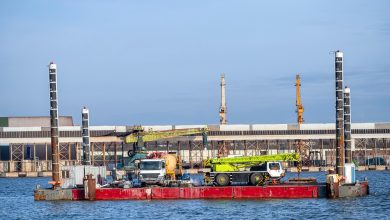
Why heavy-duty towing teams are essential for highway clearance after accidents?

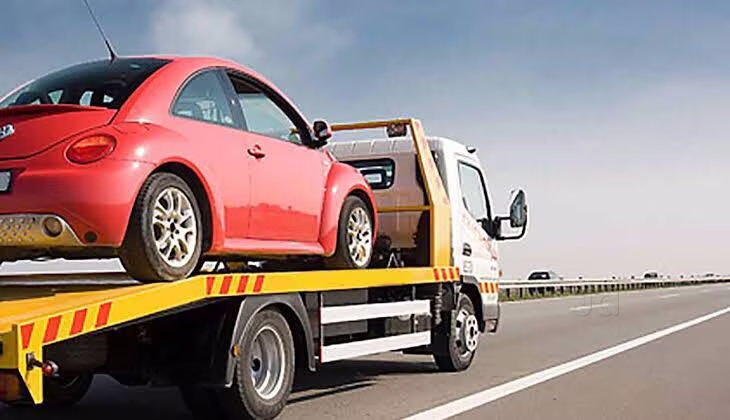
Highway accidents involving commercial vehicles create obstruction scenarios that no single operator can resolve alone. heavy duty towing teams are built to handle the equipment requirements, coordination demands, and time pressures that highway clearance imposes after a serious incident blocks travel lanes. Weight, position, and structural damage all determine how fast a highway returns to normal traffic flow. Standard roadside recovery equipment cannot move a loaded semi truck lying across multiple lanes. The tools, crew size, and operational protocols required for that job sit entirely outside what a typical breakdown service maintains on staff or carries in a single truck.
Deployment scene coordination
Highway clearance after a major commercial vehicle accident requires multiple pieces of equipment working in sequence. A rotator crane lifts the overturned vehicle. A secondary heavy wrecker positions to receive and stabilise the load once upright. For debris removal or to manage a second vehicle involved in the same incident, a third unit may be needed. Prior to the arrival of the first truck, operators coordinate. Using photos or video sent from the scene by law enforcement, the lead operator assesses vehicle position, damage, and surrounding conditions. Prior to departure from the depot, the sequence of operations is confirmed based on that assessment. Arriving without a plan wastes time working out what should have been decided before they left. Law enforcement coordinates traffic control around the work zone while the towing team manages the physical recovery. Both groups work from a shared timeline established at the start of operations.
Matching equipment to the load
Attempting to lift or drag a commercial vehicle with underrated equipment creates a secondary incident at the same location. Towing operators match equipment to the load capacity required for each job based on vehicle weight, cargo load, and recovery angle needed at the scene.
- Rotator cranes rated to the combined weight of the vehicle and the remaining cargo
- Winch lines selected for breaking strength above the calculated pull force required
- Rigging points are identified on the vehicle frame before any lift begins
- Secondary stabilisation units are positioned to prevent load shift during the recovery
- Ground conditions were assessed before heavy equipment positions for the lift operation
Operators who arrive with equipment rated below the job requirements cannot proceed. The truck returns to the depot, a correctly rated unit is dispatched, and the delay extends highway closure time by hours in some cases. Getting the equipment match right on the first dispatch is not optional in highway clearance operations.
Traffic impacts
Every minute a highway lane stays closed multiplies traffic delay across a widening area behind the incident location. Peak-hour incidents carry the highest impact. A single blocked lane during the morning commute produces delays measured in vehicle hours within thirty minutes of the initial obstruction. Full highway closures stop all movement and create a hard cutoff point where traffic cannot pass. Heavy-duty towing teams work within time windows set by the road authority managing the incident. These windows are not negotiable. The team either clears the road within the allocated time or faces penalties under the service contract. This time pressure shapes every decision made at the scene from equipment selection through to the final debris sweep before lanes reopen.
Heavy-duty towing teams must have the right equipment, crew coordination, and operational speed to clear highways after commercial vehicle accidents. Standard roadside breakdown services are not capable of handling vehicle weight, highway impact, and recovery complexity.