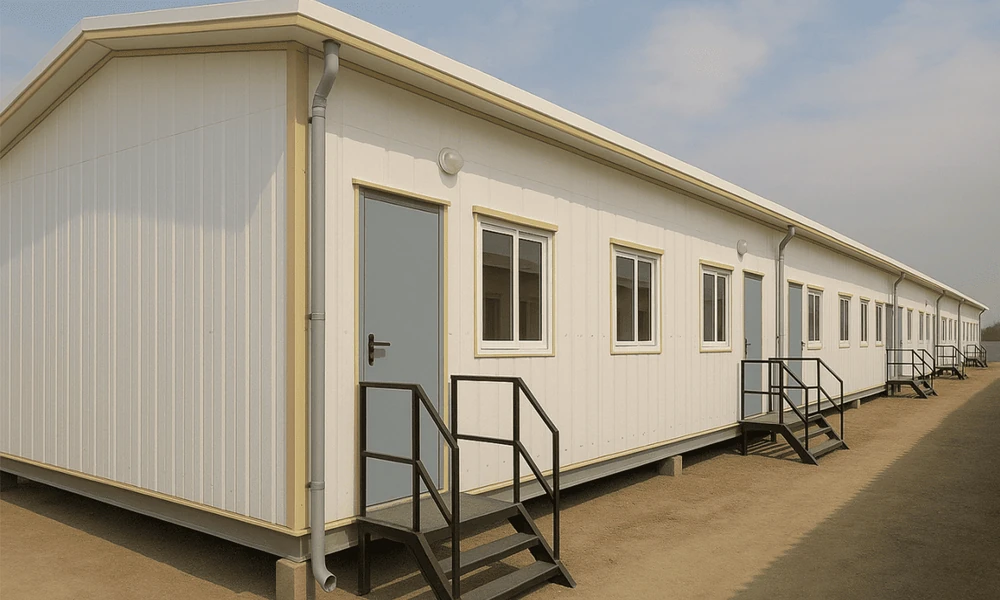

The first week on a remote project tells you a lot. If the crew is sleeping in leaking units, queuing for one working shower and eating in a room that turns into a sauna by noon, productivity drops fast. People leave. Accidents become more likely. Accommodation isn’t the glamorous part of a construction or mining budget, but get it wrong and it costs far more than the units themselves.
That’s why picking the right supplier matters. This guide is written for project managers, procurement teams and site leads who need to house people quickly and want to avoid the usual headaches.
Start With the Site, Not the Catalogue
Before you look at a single brochure, write down what the site actually demands. How many people? For how long? Is it hot, cold, wet, windy, or all four depending on the season? Will the camp move to another location when this phase ends?
These answers shape everything. A six-month road project in a desert needs strong shading, insulation and air conditioning capacity. A two-year mining camp in a cold region needs better thermal performance, heated wet rooms and units that can handle snow on the roof. A disaster relief camp may value speed of setup above almost anything else.
Once you know your conditions, you can judge whether a supplier’s products genuinely fit, rather than being impressed by photos.
What Separates a Good Manufacturer From an Average One
A complete range of building types
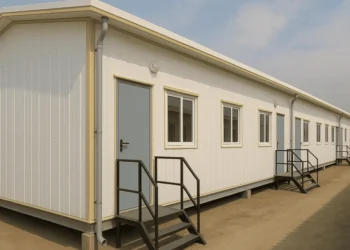
A working camp is a small town. It needs bedrooms, but also kitchens, dining halls, toilet and shower blocks, laundries, offices, a clinic or first-aid room, and storage. A prefabricated accommodation manufacturer that can supply all of these in a consistent system saves you from coordinating three or four different vendors, each with slightly different connection details and electrical standards.
Honest information about structure and materials
Ask what the frame is made of, how thick the wall and roof panels are, what type of insulation sits inside them, and what fire performance the materials have. Good suppliers answer these questions directly and back them with documents. Vague answers like “very strong” or “high quality” aren’t enough when people are going to live inside these buildings.
Experience with similar climates and projects
A manufacturer that has supplied camps for hot, humid sites will understand condensation and ventilation problems. One that mostly sells garden offices may not. Ask for project references in conditions similar to yours, and if possible, speak to a previous customer.
Container-Based vs Panel-Based Units
You’ll usually see two broad approaches.
Container-based units use a steel frame similar in shape to a shipping container. Some are converted shipping containers; others are purpose-built modules with the same footprint. They’re rigid, stack well and can be moved as complete units.
Panel-based or flat-pack units ship as a frame plus wall, floor and roof panels, then get assembled on site. Because several units fit into one shipping container, freight costs for long-distance projects can drop considerably.
Neither is automatically better. Flat-pack designs save on transport but need more assembly labour. Fully assembled modules arrive ready to connect but take up more space on trucks and ships.
Sourcing From Overseas
Many project teams look at container homes china manufacturers because of their production capacity and established steel fabrication supply chains. Ordering from abroad can work well, but it adds a few steps. You’ll need to confirm that electrical fittings, plumbing and fire safety items suit your country’s requirements, allow for sea freight and customs time, and arrange inspections before the units leave the factory.
A pre-shipment inspection, either by your own engineer or an independent company, is cheap insurance on a large order.
Questions Worth Asking Before You Sign
- What is the realistic production lead time for our quantity?
- Exactly what is included: furniture, air conditioning, lighting, sanitary fittings?
- How are units packed and protected during transport?
- Can you send a technician to supervise installation?
- What warranty covers the structure, roof and fittings, and how are claims handled?
- Are spare parts available if something breaks on site?
The answers will tell you as much about the company’s service as about its product.
Look at Total Cost, Not Unit Price
It’s tempting to pick the lowest quote. Resist that, at least until you’ve compared like with like. One supplier’s price might include furniture and air conditioning; another’s might be a bare shell. Then add freight, duties, cranes, foundations, utility connections and installation labour.
Also think about the second and third use. Units that can be dismantled and moved to the next project cleanly may be worth paying more for upfront.
Final Thoughts
Good worksite accommodation keeps people safe, rested and more likely to stay for the whole project. Choose a manufacturer the way you’d choose any critical subcontractor: check their experience, ask hard questions about materials and support, and compare the full delivered cost. Your crew will notice the difference from day one.